
Júlia Mora Tobías is an experienced footballer who decided to study for a Master in Football Business Online at Johan Cruyff Institute, to make a professional transition.
Now aged 28, Júlia Mora Tobías has extensive experience in women’s football. She started out at RCD Espanyol and also played for FC Barcelona and FC Levante Las Planas. Alongside her sporting career, she completed the Master in Football Business Online at Johan Cruyff Institute. She was one of the athletes selected by the Cruyff Athlete Fund, a scholarship programme that supports professional athletes in transitioning into the industry.
In this interview, Júlia reflects on her sporting career and emphasises the importance of education for athletes looking to enter the job market after retirement. “When you finish your football career, you need to find a job. If you don’t have experience or training, it can be difficult.”
Looking at your sporting career, what has been the biggest challenge you have faced?
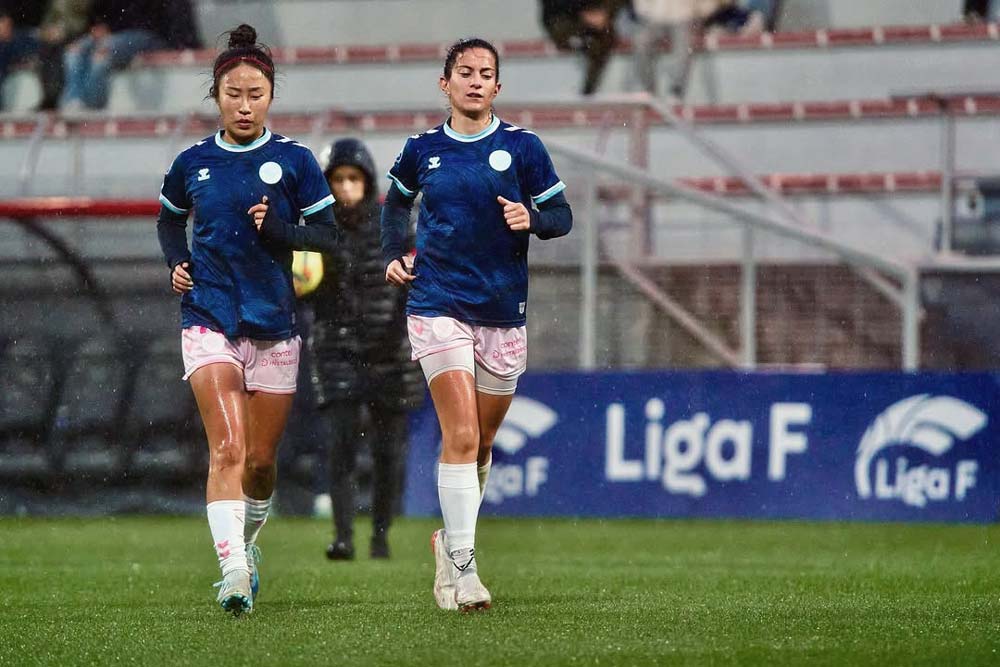
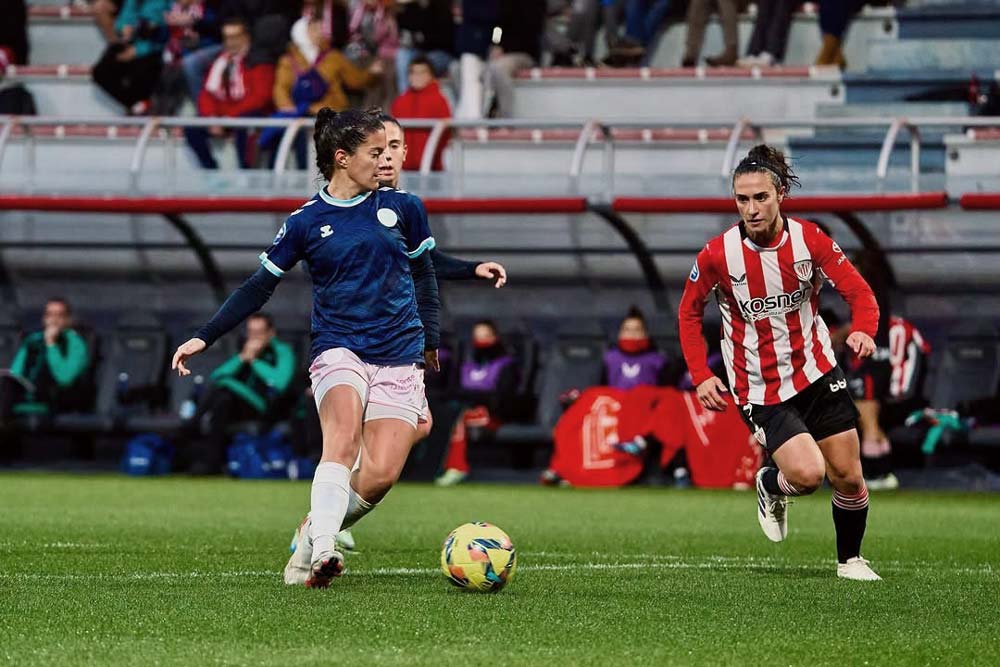
Looking back, I think my biggest challenge was earning promotion to the First Division. In the 2021–22 season, we became league champions and earned promotion with FC Levante Las Planas. At the time, I didn’t realise it, but I do now. What we achieved was huge. As a club, we weren’t under any pressure at that time, which made us approach it differently. If we won, that was great, but if not, that was fine too because promotion wasn’t our goal that year.
This achievement has grown in importance over the years because, nowadays, promotion is increasingly difficult due to the competitiveness of the teams in the Second Division. Staying up afterwards is another challenge, of course, but the first step is getting promoted. That’s why I now look back on that achievement and realise how important it was. Once we played in the First Division, it was somewhat easier, with 30 regular-season matches.
What led you to choose Johan Cruyff Institute for your education?
First of all, I was looking for flexibility.
“As I couldn’t attend classes in person, the online format was the aspect of the program that interested me the most — a modality that could make studying easier for me.”
So I started researching, because there are a lot of academic institutions out there. But of all the universities and academies offering this type of programme, I saw that Johan Cruyff Institute was the best option. It had the best professionals and I thought it would be the best place for me to learn about the sports industry. I started with a teammate, and I’m very happy with that decision.
How did you manage to balance your academic commitments with the demands of professional football?
“An important thing about Johan Cruyff Institute is that it understands the schedules and commitments of elite athletes.”
This makes studying much easier. For example, it offers longer deadlines, which I think is key. Having more time during the year or season allows you to organise yourself better. In my case, for instance, I trained in the mornings, so I couldn’t study at that time. However, in the afternoons, once I was home and resting, I used that time to study and review everything.
What role would you like to play in the sports industry, either on or off the field, in the future?
Since I was young, I’ve dreamed of becoming a coach and, eventually, managing a First Division team. However, after spending several years in the football industry, I have realised that it is very demanding and difficult to achieve this goal.
The Master in Football Business Online gives me the opportunity to continue working in the sports industry, whether within a club, an institution or a sports-dedicated company. I chose to study for this Master’s degree so that I could remain involved in football in a different capacity.
Currently, I am looking for a job and am open to new possibilities. I can’t define an exact role yet because I haven’t experienced it and don’t have a clear idea of what I want. What I do know is that I’d like to be fully involved in something sport-related. We’ll see what that turns out to be.
Which aspect of your Master’s degree do you think will be most valuable for your future career?
It may sound clichéd, but I truly believe that everything I learnt was important. Before studying at Johan Cruyff Institute, I completed a degree in Physical Activity and Sports Sciences (IMEF). However, I didn’t choose the management specialisation, so everything I learnt on this programme was new and surprising to me.
I say that everything I learned was important because, ultimately, the Master’s Final Project was a general summary of the entire programme, as it covered all the subjects.
“Creating my own project was also very important in helping me understand what I need to do from a management perspective.”
What was the topic of your final project for your Master’s degree?
Mine was about merging two football clubs. I played for Levante Las Planas, but due to league issues and other factors, the club moved to Badalona. In that move, we went from one side of Barcelona to the other and much of the club’s essence was lost, along with many teams. In Badalona, there is an old female-only club called Sigul. The Master’s Final Project therefore involved unifying Levante Las Planas with Badalona, which already had a well-established grassroots presence in the city. The challenge was to address all the changes that such a merger would entail. It was a very interesting experience.
What advice would you give to an athlete interested in pursuing a dual career?
I think it’s very important. We’re fortunate to be able to devote our lives entirely to playing football. However, we’re not lucky enough to earn what men earn. Once your football career ends — and unless you’re one of the few prominent figures in women’s football — it becomes very difficult.
For example, the minimum salary for a First Division player is around €23,500 gross per year. That’s a decent salary, but it’s hard to save. So, once your football career is over, you need to find a job. If you don’t have experience or training, that can be hard.
“I believe it’s essential for athletes to have some form of education or professional training.”
Another option is to become a police officer or prepare for civil service exams alongside your football career. Football allows you to have quite a bit of free time. For example, I trained in the mornings and played matches at the weekends, but I had time to study in the afternoons. If you’re patient and consistent, you will ultimately have a very solid foundation with which to enter the job market.


